Identifying service pathways to reduce overdose risk among youth: a multi-method, population-based, and co-design study
Project lead


Non-Communicable Chronic Conditions
BCCDC’s harm reduction research is embedded in the provincial response to the unregulated drug supply. Harm Reduction Services distributes supplies and naloxone province-wide, and its research and evaluation arm asks whether those services are reaching people and reducing deaths. Work spans population-level evaluation of overdose prevention and supervised consumption services, the evaluation of BC’s decriminalization exemption, service innovations such as pulse oximetry for people who smoke opioids, and wastewater analytics for unregulated substances. The Harm Reduction Client Survey and the BC Provincial Overdose Cohort provide the recurring data backbone.
Harm Reduction Client Survey
BC Provincial Overdose Cohort (BC-ODC)
Harm Reduction Reports
Project lead
Project lead

Scientific Director (Interim), Clinical Prevention Services

Public Health Physician, Substance Use and Harm Reduction
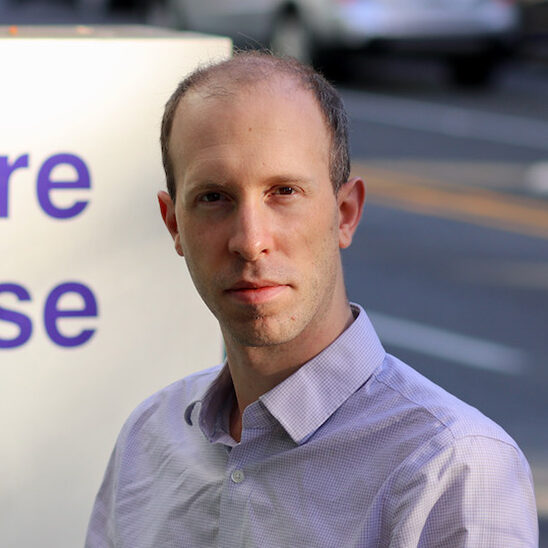
Senior Scientist, Data & Analytic Services

Clinician-Scientist

Senior Scientist, Harm Reduction and Substance Use Services, Population and Public Health Service Line

Centre affiliation

Affiliate Investigator
Panagiotoglou D (2022) Evaluating the population-level effects of overdose prevention sites and supervised consumption sites in British Columbia, Canada: Controlled interrupted time series. PLoS ONE 17(3): e0265665. https://doi.org/10.1371/journal.pone.0265665
Russell , C., Ali , F., Imtiaz, S. et al. The decriminalization of illicit drugs in British Columbia: a national evaluation protocol. BMC Public Health 24, 2879 (2024). https://doi.org/10.1186/s12889-024-20336-9
Moe, J., Chavez, T., Marr, C. et al. Feeling safer: effectiveness, feasibility, and acceptability of continuous pulse oximetry for people who smoke opioids at overdose prevention services in British Columbia, Canada. Harm Reduct J 21, 45 (2024). https://doi.org/10.1186/s12954-024-00963-6
Moe, J., Buxton, J.A., Wang, Y.E. et al. Physiologic oxygen responses to smoking opioids: an observational study using continuous pulse oximetry at overdose prevention services in British Columbia, Canada. Harm Reduct J 21, 89 (2024). https://doi.org/10.1186/s12954-024-01011-z